
Iron and Folate Deficiency: Why These Two Often Go Together
Iron and folate deficiency are two of the most common nutrient gaps, and they frequently show up in the same person at the same time. Both are essential for making healthy red blood cells, which is why their symptoms overlap so much, even though the underlying problems are different.
This article is for informational purposes only and isn't a substitute for medical advice.
What's the Difference?
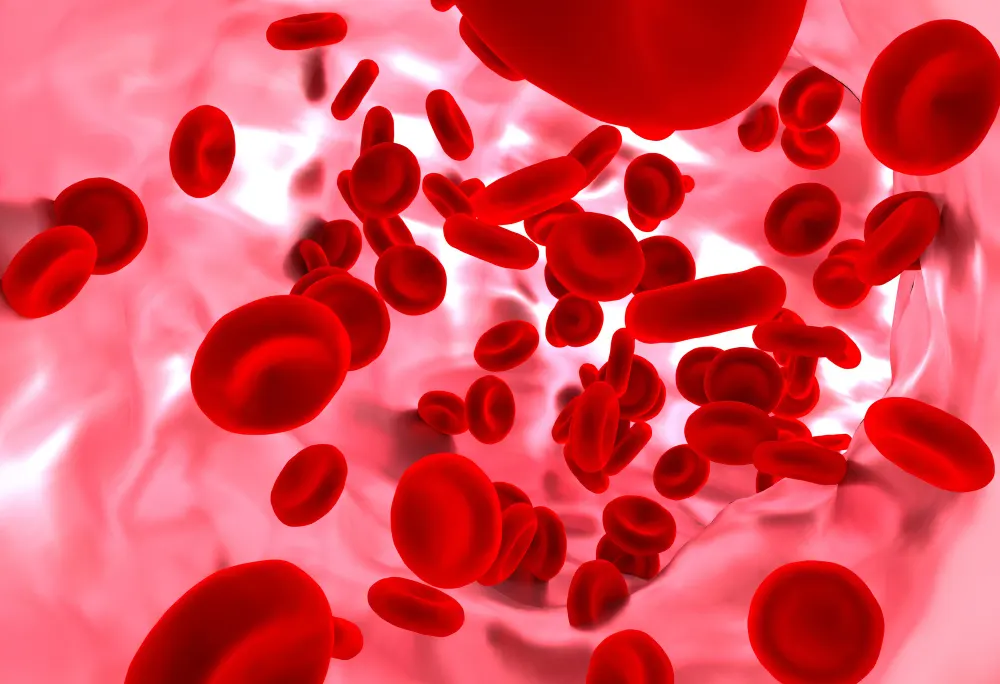
Iron is needed to build hemoglobin, the protein that carries oxygen in your blood. Without enough, red blood cells become small and pale, a condition called iron-deficiency anemia.
Folate (vitamin B9) works differently. Your body needs to convert it into its active form, L-methylfolate, before it can be used. Some people convert it poorly due to a common genetic variation, which means even a folate-rich diet can leave them functionally low. Folate deficiency causes a different type of anemia, where red blood cells become abnormally large instead of small.
Because both nutrients are needed for red blood cell production, and because both are commonly low in pregnancy, heavy menstrual bleeding, and malabsorption conditions, deficiencies in the two often overlap.
Signs of a Deficiency
Low iron and low folate share a lot of overlapping symptoms, with a few distinct ones each:
Fatigue and weakness. This is the hallmark of both deficiencies. Iron is needed to carry oxygen to tissues, while folate is needed to keep red blood cells healthy. Either shortfall leaves you feeling tired and short of energy.
Pale skin. Common to both, since both ultimately affect red blood cell health.
Digestive discomfort. Both deficiencies can cause a swollen or sore tongue and mouth sores. Iron deficiency in particular can also cause unusual cravings for non-food items like ice, known as pica.
Mood and mental clarity. Folate plays a role in producing neurotransmitters like serotonin and dopamine. Low levels have been linked to brain fog, irritability, and in some research, depressive symptoms. Iron deficiency is also linked to difficulty concentrating and low mood.
Heart and cardiovascular effects. Folate helps break down homocysteine, an amino acid that can build up in the blood when levels are low, which is associated with higher cardiovascular risk. Iron deficiency, meanwhile, can cause a rapid or irregular heartbeat as the heart works harder to move oxygen through the body.
Hair and nails. Iron deficiency specifically is associated with hair thinning or loss and brittle nails.
Pregnancy risks. Both nutrients matter enormously here. Folate is critical in early pregnancy for neural tube development, with deficiency linked to conditions like spina bifida. Iron needs also rise significantly during pregnancy to support increased blood volume, and deficiency is linked to preterm birth and low birth weight.
Who's Most at Risk
A few groups are more likely to run low in one or both nutrients:
- People with a common genetic variation (MTHFR) that reduces their ability to convert folic acid into its active form
- Pregnant people, whose iron and folate needs both increase significantly
- People who menstruate heavily, who lose iron regularly through blood loss
- Those with alcohol use disorder, since alcohol interferes with folate absorption
- People with digestive conditions like celiac disease or Crohn's disease, which can impair absorption of both nutrients
- Anyone on medications such as methotrexate or certain anti-seizure drugs
- People following vegetarian or vegan diets, who may get less easily absorbed iron from food
A Note on Combination Supplements
Since iron and folate deficiency often occur together, some supplements are formulated to address both at once rather than isolating a single nutrient. Erina Nutrition's Erinal IRO, for instance, combines liposomal (LCE) iron with L-methylfolate, pyridoxal-5-phosphate (active B6), vitamin B12, vitamin D, vitamin C, and zinc, pairing the two nutrients most central to healthy red blood cell production. Combination formulas like this can be a convenient option if bloodwork shows you're low in both. As always, testing to confirm exactly what you're low in is the best way to know whether a combination formula, a single-nutrient supplement, or dietary changes make the most sense for you.
The Takeaway
Iron and folate deficiency aren't always obvious at first, and their symptoms overlap enough that it's hard to tell them apart without bloodwork. Fatigue and low mood can have a dozen causes, which is exactly why it's worth ruling out a nutritional gap. If you fall into one of the higher-risk groups above, a conversation with your doctor about testing, and about the right supplement approach for what you're actually low in, is a good next step.
This article is for informational purposes only and isn't a substitute for medical advice.