
Essential Vitamins and Minerals for Mothers: A Quick Research Brief
Pregnancy and breastfeeding place real, measurable demands on a mother's body. Research puts numbers behind exactly how much certain vitamins and minerals matter during this window — here's a quick look, backed by the data.
Folic Acid (Folate) The clearest nutrient-outcome link in maternal health. Periconceptional folic acid supplementation has been shown to prevent 50% or more of neural tube defects such as spina bifida and anencephaly, according to the American Academy of Pediatrics. In one landmark randomized trial, women taking folic acid before conception saw an estimated 72% reduction in neural tube defect risk compared to those who didn't.
DHA (Omega-3 Fatty Acid) DHA is a building block for the baby's brain and eyes, with the greatest transfer happening in the third trimester. It also continues to matter during breastfeeding, passed to the baby directly through breast milk.
Iron Iron deficiency anemia is estimated to complicate 30–60% of pregnancies globally, with prevalence climbing to nearly 75% of women by the third trimester, according to a 2024 Global Burden of Disease analysis. A separate global meta-analysis pooling nearly 34,000 pregnant women put the overall prevalence of iron deficiency anemia at close to 19%, rising sharply in the second and third trimesters.
Calcium The baby draws calcium from the mother to build its own bones and teeth. If dietary intake falls short, the mother's body compensates by pulling calcium from her own bone stores — a 2025 study of women during the perinatal period specifically linked inadequate calcium and vitamin D intake to measurable effects on maternal bone health assessments.
Vitamin D Vitamin D works closely with calcium to support the baby's bone development and the mother's own bone maintenance. As noted above, recent research has directly tied insufficient vitamin D intake during the perinatal period to weaker maternal bone health markers — making it one of the more commonly under-met nutrients in this window.
Vitamin A Important for the baby's vision, immune system, and organ development. Vitamin A needs are typically met through diet plus moderate supplementation, since very high doses are not recommended in pregnancy.
Vitamin B12 B12 works alongside folate in red blood cell formation and neurological development. It's especially relevant for mothers following plant-based or lower-meat diets, where B12 intake can be harder to reach through food alone.
Vitamin K Vitamin K supports normal blood clotting and plays a role in bone metabolism — relevant for the mother during and after childbirth, and important for the baby in the earliest days of life.
Meeting These Needs Through Diet — and Where a Supplement Fits In
Hitting all eight of these nutrients through food alone, every day, is genuinely difficult — especially during breastfeeding, when a mother's own nutrient needs are competing with what she's providing through her milk.
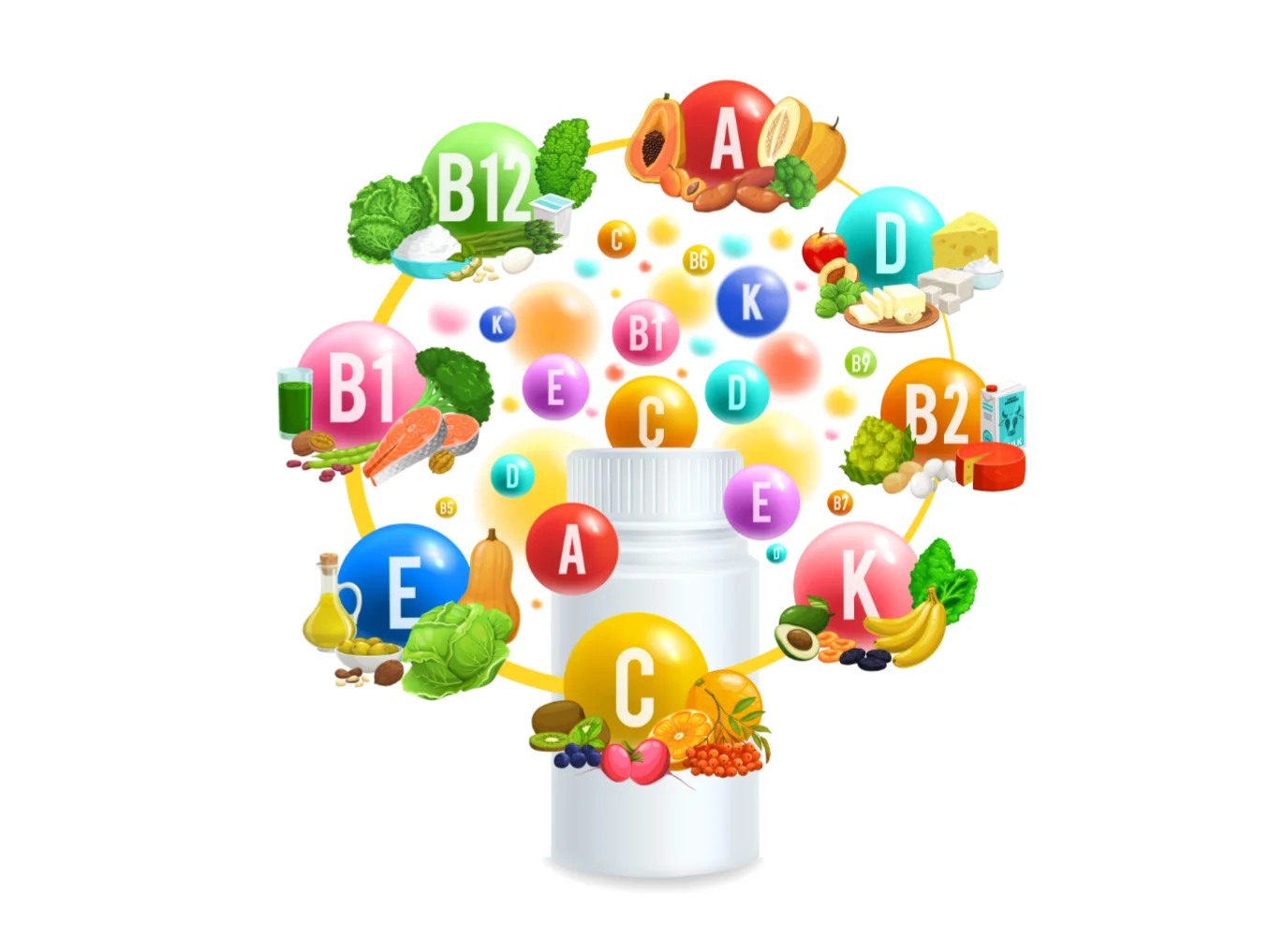
This is the gap Erina Nutri, a milk-based powdered supplement, is designed to help fill. It's formulated with folic acid, DHA, iron, calcium, vitamin D, vitamin A, vitamin B12, and vitamin K — covering the core nutrients highlighted above in a single daily drink, mixed with water rather than a handful of separate pills. Learn more about us.
As with any supplement, individual needs vary by diet, health history, and stage of pregnancy or breastfeeding — a healthcare provider is the best source for what's right for any individual mother.
Sources
American Academy of Pediatrics. (1999, reaffirmed 2025). Folic acid for the prevention of neural tube defects. Pediatrics, 104(2), 325–327.
Global burden of maternal disorders attributable to iron deficiency related sub-disorders in 204 countries and territories. (2024). Frontiers in Public Health. https://www.frontiersin.org/journals/public-health/articles/10.3389/fpubh.2024.1406549/full
Global prevalence of iron deficiency anemia and its variation with different gestational age: A systematic review and meta-analysis. (2024). ScienceDirect. https://www.sciencedirect.com/science/article/pii/S2667268524001207
Ichikawa, R., Shibata, M., Nakura, Y., Iizuka, K., Uenishi, K., Sekiya, T., Suzuki, A., & Nishizawa, H. (2025). Inadequate calcium and vitamin D intake among Japanese women during the perinatal period: A cross-sectional study with bone health assessment. Nutrients, 17(6), 1075.
Wald, N., et al. (1991). Prevention of neural tube defects: Results of the Medical Research Council Vitamin Study. The Lancet.
This article is for general informational purposes and is not medical advice. Consult a healthcare provider before starting any new supplement during pregnancy or breastfeeding.